

A complete lightning protection system for a manufacturing facility relies on four interdependent components: an air termination system that intercepts the strike, down conductors that channel the current, an earthing system that disperses it into the ground, and Surge Protection Devices (SPDs) that shield electrical and electronic equipment. A single lightning rod on the roof does not protect an entire plant. The IEC 62305 series defines how these elements work together, while risk assessment methodology sets the required protection level before any design decision.
This guide walks you through each component, the consequences of a missing element, the role of risk assessment, and the operational actions that keep production safe during thunderstorms. The goal is simple: give you the criteria to judge whether your current installation is complete and compliant, even without specialized lightning expertise on site.
What are the essential components of a lightning protection system in a manufacturing facility?
A compliant lightning protection system for an industrial site is built around four normalized components, each addressing a specific phase of a lightning event. They are defined in the IEC 62305 series, which covers general principles, risk management, physical damage, and protection of electrical and electronic systems.
The four building blocks of an industrial lightning protection system
- Air termination system: captures the lightning strike at a controlled point (rods, meshes, catenaries).
- Down conductors: route the lightning current safely from the capture point toward the ground.
- Earthing system: disperses the current into the soil with low impedance.
- Surge Protection Devices (SPDs): clamp transient overvoltages on power and signal lines to protect sensitive equipment.
Together, these elements form what standards call the external Lightning Protection System (LPS), coupled with internal protection. The external LPS deals with the physical impact and current path. The internal protection, mainly SPDs, addresses the induced and conducted overvoltages that travel through cabling and can destroy automation, drives, servers and instrumentation far from the strike point.
For sites with higher stakes, this physical architecture is often paired with real-time storm monitoring and lightning protection for industrial plants, which supports operational decisions during active thunderstorms. The IEC 62305 series governs the physical system, while IEC 62793 addresses thunderstorm warning systems used for personnel safety and process management.
The IEC framework behind each component
The reference framework for manufacturing facilities relies on two complementary standards families:
- IEC 62305 (parts 1 to 4): general principles, risk management, physical damage to structures and life hazard, and protection of electrical and electronic systems within structures.
- IEC 62793: thunderstorm warning systems, used to trigger operational protective actions before and during storms.
In France, a public document from the Préfecture de la Charente confirms that the risk assessment of a structure against lightning relies on IEC 62305-2, which provides the method for selecting appropriate protection measures. You can consult this reference in the prefectoral annex on lightning risk.
Scope reminder: IEC 62305-2 defines the risk assessment method used to size physical protection, while IEC 62793 specifies thunderstorm warning systems used to trigger operational actions. Confusing the two leads to incomplete protection strategies.
How does each component protect your facility and personnel?
Understanding what each component actually does, and what happens when it is missing, helps you spot gaps in an existing installation. The chain only works if every link is present and correctly dimensioned.
Air termination, down conductors and earthing: the physical path
The air termination system (rods, meshes or catenary wires) determines where the strike is intercepted. Without it, the lightning current attaches to whichever metallic element is most exposed: a roof edge, a vent, an antenna, or a worker. Down conductors then carry the current along a controlled path to the earthing system. A missing or discontinuous down conductor forces the current to find alternative routes through building structures, risking side flashes and fires.
The earthing system disperses the current into the soil. If its impedance is too high, part of the energy returns through other grounded elements, generating dangerous potential differences across the site. This is where personnel protection becomes a direct issue: step and touch voltages can injure workers located near down conductors or earth electrodes during a strike.
SPDs: protecting electronics from induced overvoltages
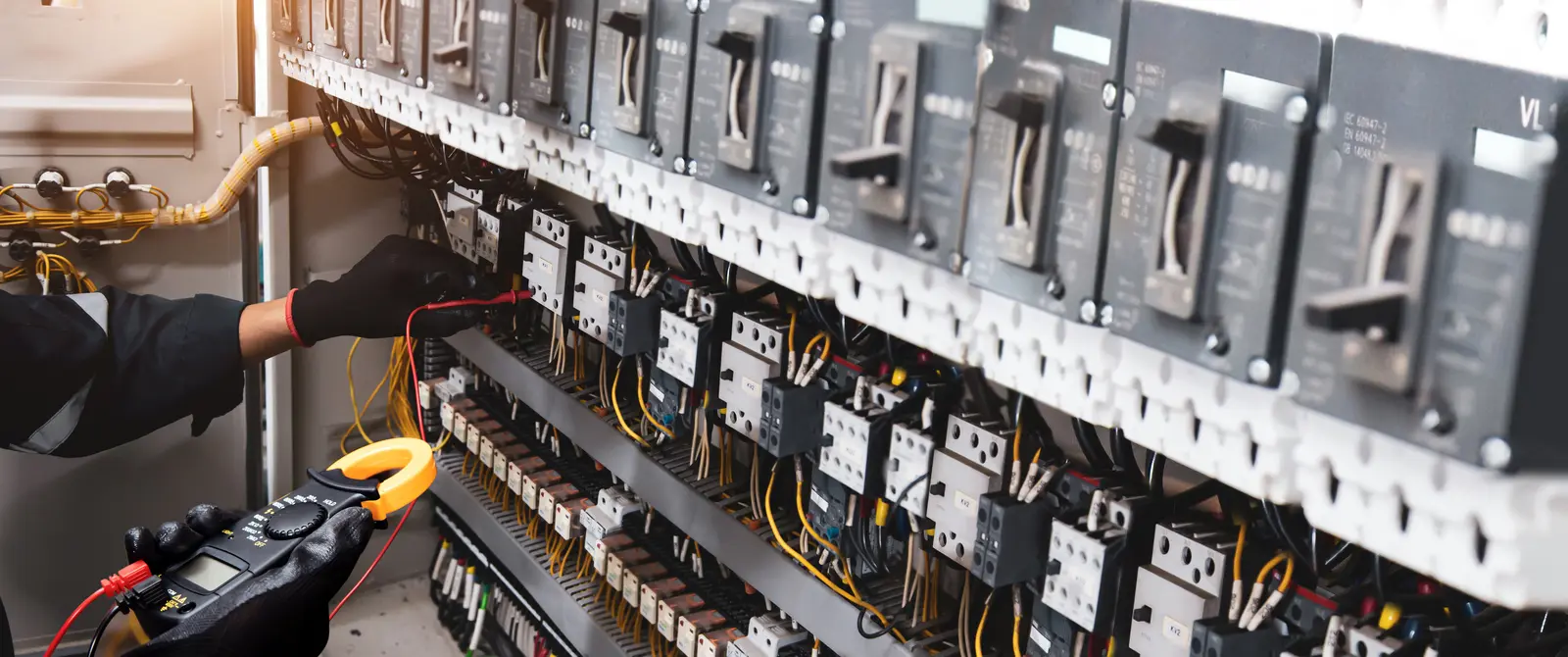
Even a strike at some distance from the facility can induce destructive transients on power lines, data cables and sensor loops. SPDs, coordinated across main switchboards, sub-distribution boards and sensitive equipment, clamp these transients. Without properly coordinated SPDs, a strike that leaves the building visually intact can still destroy PLCs, variable speed drives, servers and instrumentation, triggering extended production stoppages.
The INRS, the French national institute for occupational health and safety, confirms that for classified industrial sites, lightning rods and surge protective devices are the most commonly deployed protection equipment, following a mandatory lightning risk analysis and technical study.
Typical failure scenarios on an incomplete installation
- Controlled strike interception on dedicated air terminations.
- Current safely routed to a low-impedance earth.
- Coordinated SPDs limit transients at every distribution level.
- Reduced risk of fire, injury and uncontrolled stoppages.
- Current intercepted but poorly evacuated: side flashes possible.
- Induced overvoltages destroy PLCs and drives.
- Dangerous step and touch voltages near conductors.
- Long unplanned downtime and potential insurance disputes.
No system guarantees zero damage: lightning protection reduces the probability and severity of damage to acceptable levels defined by risk assessment. It does not eliminate the risk, which is why operational procedures and warning systems remain essential.
Why does lightning risk assessment matter before designing protection?
Designing a protection system without a prior risk assessment leads to one of two costly outcomes: over-protection, with unnecessary investment, or under-protection, which leaves critical assets and personnel exposed. The role of the assessment is to translate your site’s exposure and criticality into a required Lightning Protection Level (LPL).
IEC 62305-2 provides the methodology used in Europe and widely referenced internationally. It considers the structure’s dimensions, location, ground flash density, type of activity, presence of people, criticality of services, flammable or explosive materials, and the economic value of what is housed inside.
From risk assessment to protection level
The assessment compares calculated risks against tolerable risk thresholds for loss of human life, loss of service to the public, loss of cultural heritage and economic loss. When a tolerable threshold is exceeded, protection measures must be added until the residual risk falls below the threshold. The chosen measures translate into a protection level (I to IV), which then dictates the geometry of air terminations, the number of down conductors, the quality of earthing and the class of SPDs.
- Characterize the site:geometry, location, ground flash density, activity, personnel, critical equipment and stored materials.
- Calculate risks per IEC 62305-2:compare each relevant risk component to its tolerable threshold.
- Select protection measures:combine physical LPS, SPDs and operational measures until residual risks are acceptable.
- Derive the protection level (LPL I–IV):size air terminations, conductors, earthing and SPDs accordingly.
- Document and validate:produce the technical study and acceptance file required by national regulations.
For classified industrial sites in France (ICPE), the INRS reminds that both an analyse du risque foudre and a technical study of protection devices are mandatory before installation. The same logic applies in substance to many industrial regulatory frameworks: no design without a documented assessment.
How can you ensure compliance and operational continuity during thunderstorms?
A compliant installation on day one can drift out of conformity within a few years. Physical components corrode, SPDs age or trip permanently after absorbing severe transients, and site modifications alter current paths. Compliance is maintained through periodic inspections, documented maintenance and clear operational procedures.
Inspection, maintenance and documentation
In France, the arrêté du 19 juillet 2011, which modifies the arrêté du 4 octobre 2010 for certain classified installations, imposes a complete verification by a competent body, distinct from the installer, within six months of installation, followed by annual visual verifications. The full regulatory text is available via the AIDA reglementary database on ICPE lightning requirements. Equivalent requirements exist in many other national regulations: check the regime applicable to your facility.
A reliable inspection and documentation routine typically covers:
- Visual check of air terminations, conductors and bonding (corrosion, mechanical damage, continuity).
- Measurement of earth resistance and continuity of the earthing network.
- Verification of SPD status indicators and replacement of tripped units.
- Review of site modifications that may have altered the LPS (new installations, roof penetrations, cabling changes).
- Updated technical file including the risk assessment, as-built drawings and inspection reports.
Operational procedures and storm alerts
Physical protection does not stop production during a storm, and workers remain exposed outside buildings. An operational storm procedure complements the LPS and addresses what hardware cannot: human behavior and process decisions. IEC 62793 provides the framework for thunderstorm warning systems used for these purposes.
- Watch level (storm approaching, outside a defined radius):brief outdoor teams, review ongoing high-risk tasks, prepare to secure sensitive operations.
- Alert level (storm within the operational radius):stop outdoor work at height, around tall structures and near conductive materials; move personnel to safe areas.
- Imminent risk (lightning activity detected locally):apply full shutdown procedures for exposed processes, maintain personnel in sheltered zones until the all-clear.
- All-clear:document the event, inspect SPDs and sensitive equipment, record any damage or anomaly.
Documenting storm events is also essential for insurance. Keep timestamps of alerts, actions taken, affected equipment and inspection reports. This evidence base supports claim handling and helps distinguish lightning-related damage from other causes.
What are the key takeaways for a complete lightning protection strategy?
A lightning rod alone is not a lightning protection system. Protection relies on the coordinated presence of air terminations, down conductors, earthing and SPDs, dimensioned from a documented IEC 62305-2 risk assessment, and complemented by operational procedures aligned with IEC 62793 thunderstorm warning principles. Each missing component shifts risk back to your personnel, your assets or your continuity of production.
Checklist to judge your current installation
- Documented lightning risk assessment per IEC 62305-2, kept up to date after site modifications.
- Air termination, down conductors and earthing dimensioned for the required protection level.
- Coordinated SPDs on power and signal lines, with status monitoring.
- Periodic inspections by a competent body, in line with applicable national regulation.
- Written storm procedure covering outdoor work, sensitive processes and post-event checks.
If you cannot answer “yes” with evidence to each of these points, the installation very likely needs a professional audit. An external assessment confirms whether the existing components match the current risk profile of the site and highlights the gaps to address before the next storm season, without obliging you to replace a compliant system that only needs targeted upgrades.
Is a lightning rod alone enough to protect a whole factory?
No. A lightning rod only intercepts the strike. Without properly sized down conductors, a low-impedance earthing system and coordinated SPDs, the current can cause side flashes, destroy electronic equipment through induced overvoltages, and create dangerous step and touch voltages for workers.
How often should an industrial lightning protection system be inspected?
Inspection frequencies depend on national regulation and site classification. In France, for the ICPE regime covered by the arrêté of 19 July 2011, a complete verification is required within six months of installation, followed by annual visual checks by a competent body. Check your local regulatory framework for equivalent requirements.
How should lightning-related damage be documented for an insurer?
Keep records of storm alerts received, timestamps of events, actions taken by the teams, affected equipment, inspection reports on the LPS and SPDs, and any third-party technical assessment. A real-time storm monitoring log strengthens the evidence base and helps correlate damage with specific lightning activity.
What is the difference between IEC 62305 and IEC 62793?
IEC 62305 covers the physical lightning protection system of structures, including risk assessment and SPDs. IEC 62793 specifies thunderstorm warning systems, which support operational decisions such as stopping outdoor work or securing processes before and during storms. The two are complementary, not interchangeable.
If you need an external view on your installation and operational procedures, request a structured assessment from a specialized provider. A documented audit, combining a review of the physical LPS, SPD coordination and storm response procedures, is the most direct way to confirm compliance and identify the gaps worth closing before the next storm season.